
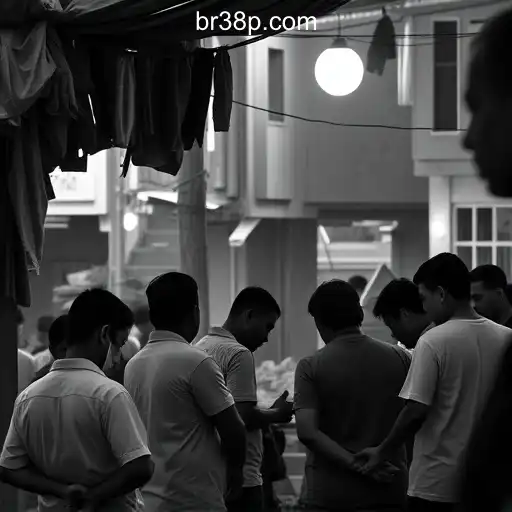
38P: A Plataforma de Apostas #1 do Brasil | Understanding Jueteng: A Cultural and Social Phenomenon
Explore the complexities of Jueteng, a deeply-rooted numbers game in the Philippines, and its cultural and socio-economic significance, alongside comparisons with global betting practices. de 38P: A Plataforma de Apostas #1 do Brasil
Understanding Jueteng: A Cultural and Social Phenomenon
The game of Jueteng has long been a prominent feature in the cultural landscape of the Philippines, characterized by its blend of tradition, simplicity, and controversy. Often described as an illegal numbers game, Jueteng deeply intertwines with the social fabric of Philippine communities, offering a glimpse into both the challenges and resilience of its people.
The Mechanics of Jueteng
Jueteng operates on a simple premise: players choose a combination of two numbers, usually ranging from 1 to 37, with the winning pair selected through a draw. This number range allows for numerous combinations, adding an element of chance that attracts a wide array of participants. The promise of a lucrative payout, despite the minimal investment required, makes Jueteng particularly appealing to those seeking an escape from financial woes.
Collectors, known as 'kubradores,' form the backbone of the Jueteng network, traversing their communities to gather bets from eager participants. In return for their efforts, they receive a commission from the total collected bets. Moreover, 'cobradores,' or coordinators, oversee the operations, ensuring that the betting process runs smoothly. The structure is intricately organized, revealing a well-oiled machine that, despite its illegal status, operates with a level of efficiency unmatched by many legal enterprises.
The Cultural Significance of Jueteng
For many Filipinos, Jueteng is more than just a game; it is a part of their cultural heritage. The practice dates back to the Spanish colonial era, evolving into a community affair that transcends age and social class barriers. In certain areas, Jueteng is woven into daily routines, its draws eagerly anticipated by the hopeful participants.
Despite its enduring presence, Jueteng's cultural significance is often overshadowed by its illegal status. The government has consistently attempted to eradicate the game, citing its potential for corruption and its exploitation by criminal syndicates. Yet, due to its deep-rooted presence in communities and its reflection of societal aspirations, these efforts have met with limited success.
Jueteng's Controversial Nature
The primary critique of Jueteng revolves around its illegality and the corruption it purportedly breeds. Over the years, numerous scandals have surfaced, implicating public officials in its operations. Allegations of protection money, bribery, and election-rigging linked to Jueteng proceeds have entrenched the game in the national consciousness as a symbol of systemic corruption.
Despite these controversies, arguments in defense of Jueteng persist. Proponents highlight its role in providing livelihoods in economically challenged areas. For many impoverished communities, this game represents not only a chance to win money but also a way to make ends meet. Furthermore, the sense of community fostered by Jueteng, where local residents come together to participate or simply discuss the results, holds intrinsic value.
Comparisons with Global Betting
When examining Jueteng in a global context, parallels can be drawn with betting practices in other countries, such as Brazil's emerging platform, '38P: A Plataforma de Apostas #1 do Brasil.' Like Jueteng, the popularity of betting in Brazil underscores how similar illicit activities cater to community and economic needs, despite regulatory challenges.
The rise of digital platforms such as 38P signifies a shift in how betting markets operate, integrating technology to enhance accessibility and user experience. Unlike Jueteng, which thrives on its clandestine nature, digital platforms can operate with a semblance of legality, given appropriate regulation.
Legal and Regulatory Challenges
The ongoing struggle against Jueteng in the Philippines highlights broader issues concerning regulatory frameworks. The government's attempts to establish legal alternatives, such as the small-town lottery (STL), have been met with mixed success, often criticized for their inability to replicate Jueteng's informal community network.
The persistence of Jueteng raises questions about regulatory approaches and the practicality of prohibition in addressing community needs. In contrast, platforms like 38P are examples of how legal frameworks can adapt to modern betting demands when proper regulation and oversight are enforced.
Future of Betting Practices
Considering the cultural resonance and socio-economic role of Jueteng, complete eradication seems an unlikely outcome. Instead, a pragmatic approach that acknowledges Jueteng's cultural implications might prove more effective. By learning from global counterparts and legalizing with oversight, it is possible to mitigate the adverse social impacts while addressing economic concerns.
This article aims to shed light on Jueteng as more than just an illegal activity, emphasizing its cultural roots and importance to countless Filipino communities. As debates on its future continue, there is much to learn from other nations' experiences, proving that the journey to potential legalization or eradication requires nuanced understanding and intentional dialogue.
